Tech specs
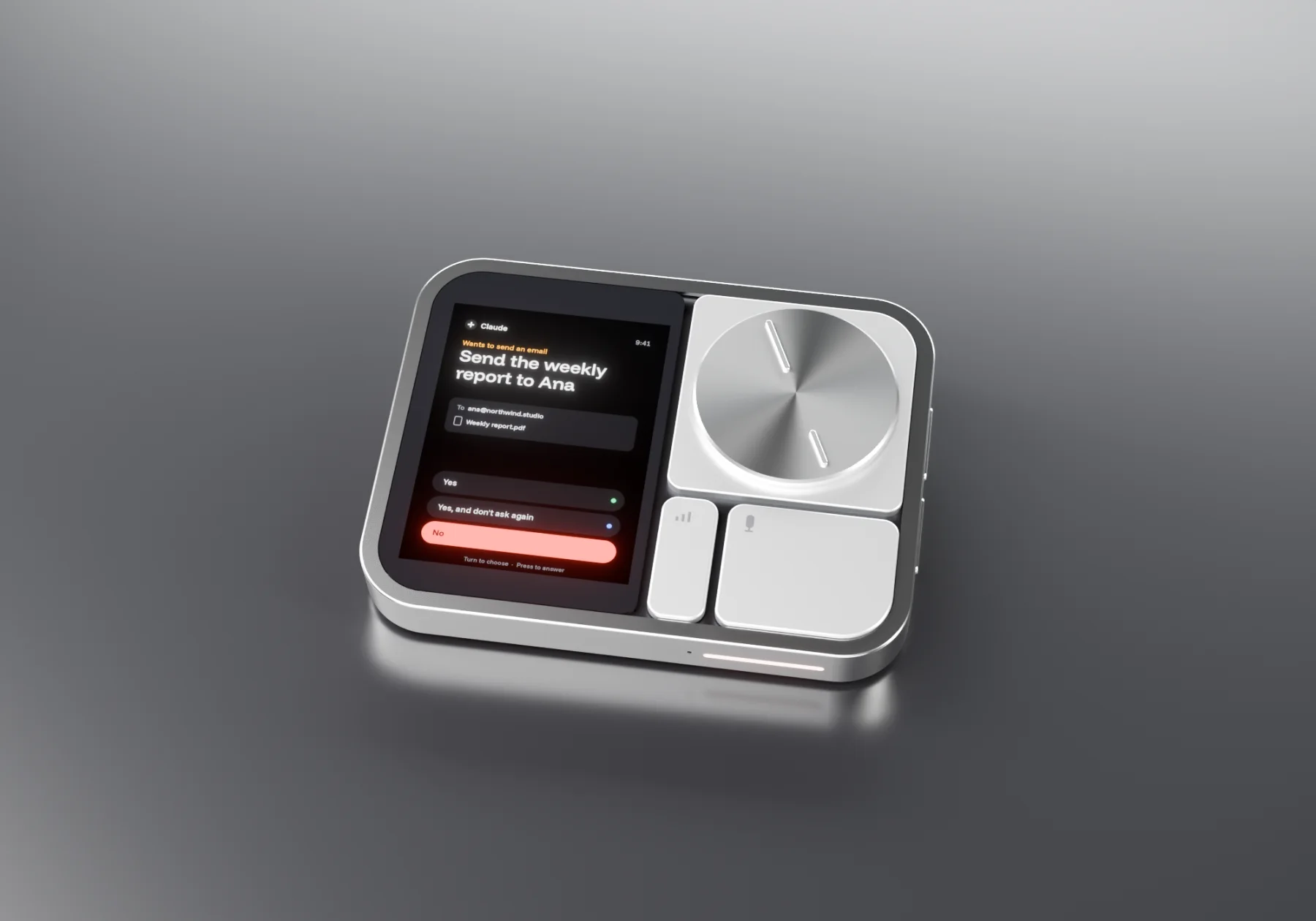
The final device as it is designed today. Modelled and routed; not fabricated yet.
- Size
- 102 × 78 × 11 mm (body) · round stand Ø66 mm, tilted 8°
- Display
- 2.8″ 640 × 480 MIPI under glass with a black mask (49 × 70.8 mm)
- Controls
- Aluminium knob Ø39 mm over a magnetic angle sensor (MT6701), press to confirm · 2 keys on metal domes, 0.5 mm travel · 2 side buttons
- Colour code
- Yes Yes, and… Yes, and… ² No Waiting Green yes · blue and violet “yes, and…” · red no · amber waiting · violet breathing while working
- Light
- 5 side-view RGB LEDs (SK6812SIDE-A) behind a front light guide
- Sound
- 15 × 11 mm speaker, 1 W · 2 MEMS microphones
- Processor
- ESP32-P4 · ESP32-C6 2.4 GHz radio with an FPC antenna behind a glass-fibre polycarbonate cover
- Power
- 950 mAh Li-ion battery · USB-C
- Board
- 4 layers, 45.9 × 72.2 × 1.0 mm, 165 components
- Materials
- Aluminium frame, black aluminium inner chassis, glass, glass-fibre PC bottom cover, silicone base
- Software
- Bridge app for macOS (menu bar) · Claude Code through its PermissionRequest hook · Windows, Linux and other agents on the roadmap
- Prototype today
- ESP32-S3 on a breadboard with a rotary encoder, a key, an RGB LED and a buzzer. Tested end to end with Claude Code.
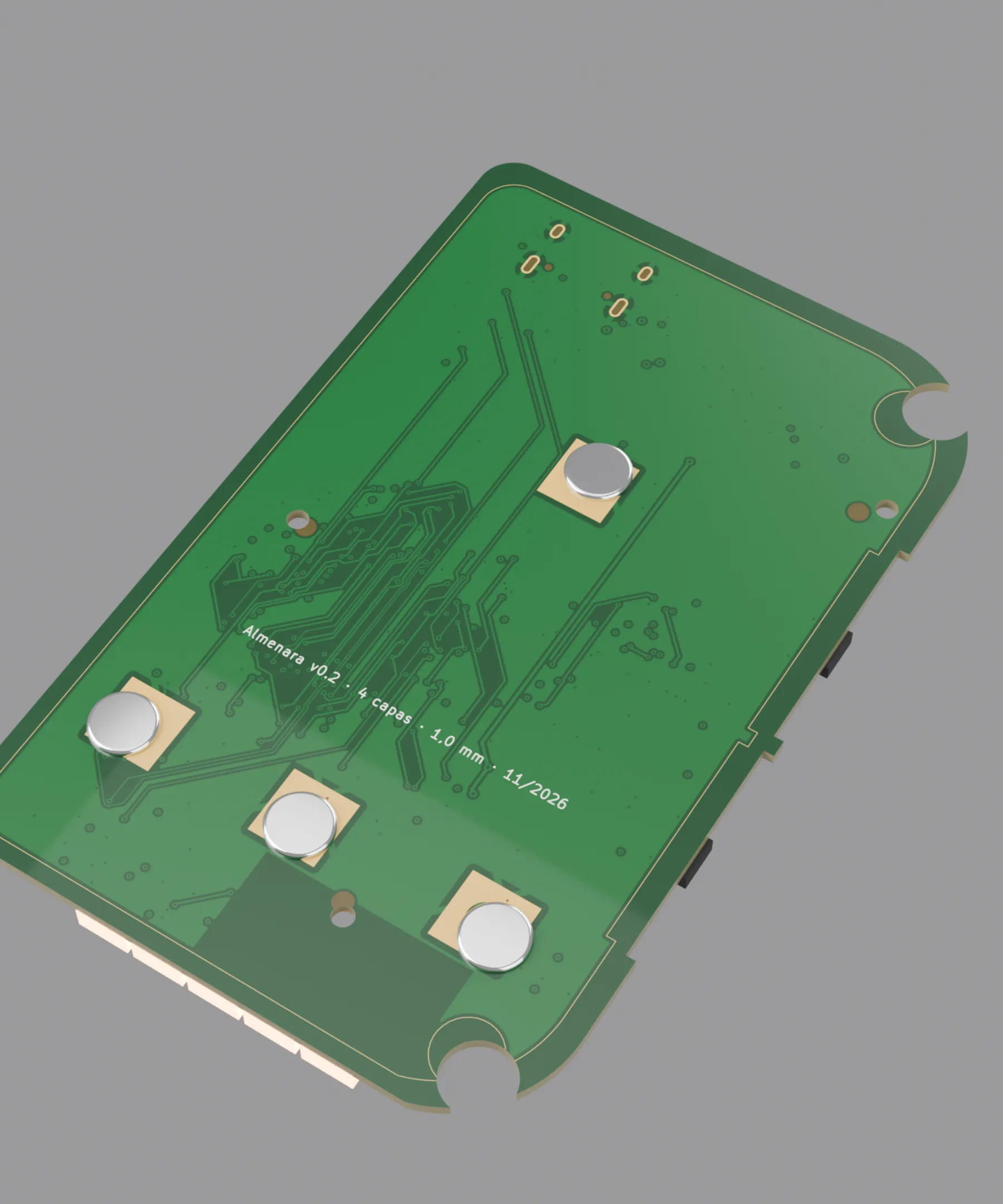
Every figure comes from the CAD model and the KiCad board. They may change before fabrication.